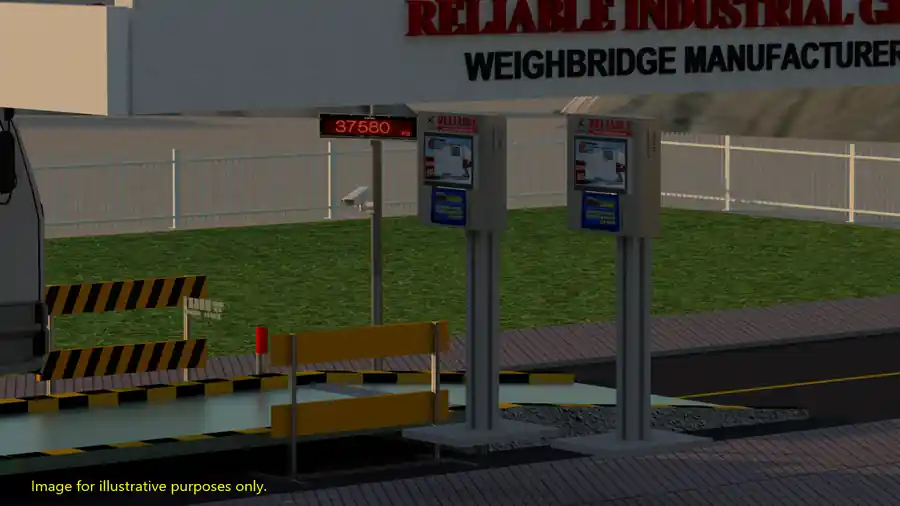
An outdoor weighbridge kiosk is a driver interface installed near the weighbridge. It allows the driver to complete selected weighing steps without entering an office or depending fully on an operator.
The kiosk can include a display, industrial computer, RFID reader, barcode scanner, ticket printer, intercom, push buttons, and weather-protected cabinet.
Why Use a Weighbridge Kiosk?
A kiosk improves the self-service capability of the weighbridge. It is useful for sites that want faster transactions, reduced operator workload, and better control during day and night operations.
Outdoor kiosks should be designed for site conditions. Depending on the environment, the cabinet may require ventilation, temperature control, dust protection, rain protection, cable management, and secure mounting.
In an unmanned system, the kiosk becomes an important driver interaction point. It can guide the driver through first weighing, second weighing, ticket printing, and exit instructions.
Conclusion
An outdoor weighbridge kiosk can make weighing operations faster, more organized, and more driver-friendly. It is especially useful for sites planning semi-automated or fully unmanned weighbridge operation.
https://reliableglobal.com/wp-content/uploads/Website.gif00adminhttps://reliableglobal.com/wp-content/uploads/Website.gifadmin2026-05-12 17:00:232026-05-12 17:00:59Outdoor Weighbridge Kiosk System for Driver Self-Service Weighing
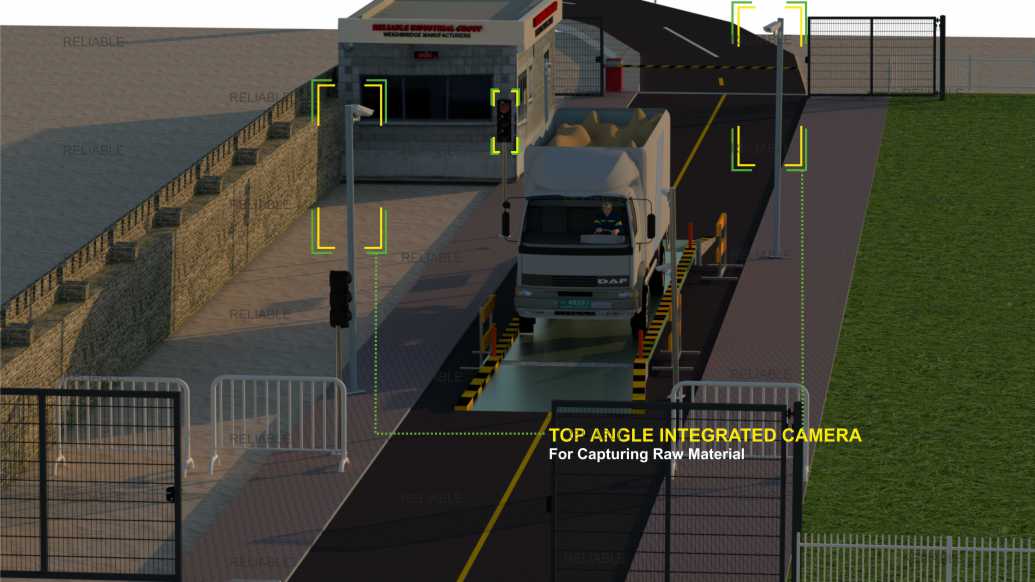
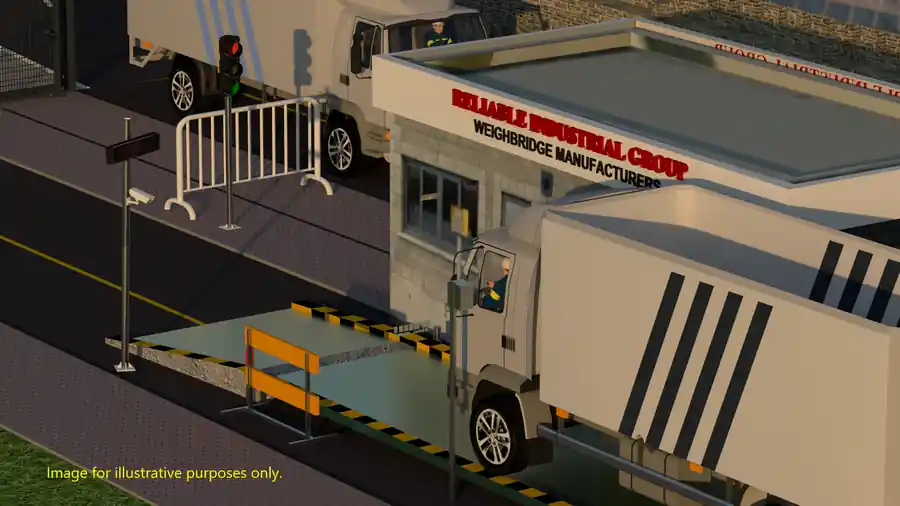
Weighbridge traffic control helps manage truck entry, weighing and exit at busy industrial sites. A weighbridge boom barrier works with traffic lights, sensors and software to guide drivers through each stage. Together, these devices help reduce vehicle conflicts and protect the weighing process.
Reliable Industrial Group provides integrated control solutions for sites in the UAE. First, we review your vehicle route and weighing workflow. We then select the signals, barriers and control logic to suit the site.
Why Weighbridge Traffic Control Matters
Several trucks approaching a scale at once can cause queues, missed steps and wrong records. For example, a second vehicle may enter before the first truck clears the platform. Clear signals and controlled access help reduce this risk.
In addition, the system links vehicle movement to the weighing transaction. This helps staff match the right truck to the right record. However, barriers alone cannot prevent every unsafe movement, so the design must also consider lane layout and vehicle detection.
How Weighbridge Traffic Control Works
The controller checks the platform status and transaction stage before allowing movement. When the scale is busy, the entry light stays red. Once the required checks pass, the system opens the entry barrier and signals the driver to proceed.
Identify the truck: First, RFID, ANPR or an operator confirms the vehicle details.
Check the route: Next, the controller checks that the platform and entry path are available.
Allow entry: The barrier opens, and the entry signal guides the driver onto the scale.
Check position: Sensors confirm the truck sits within the required weighing area.
Capture weight: The system records the reading once the weight is stable and the transaction checks pass.
Allow exit: Finally, the exit barrier and signal release the truck when the exit path is clear.
The next vehicle waits until the platform is clear. As a result, the system helps maintain one controlled weighing cycle at a time. The exact sequence depends on whether the site uses one-way or two-way traffic.
Weighbridge Boom Barrier Integration
A weighbridge boom barrier provides a visible access point before or after the platform. The software can control it through a suitable controller and interface. In addition, status signals can confirm whether the barrier has opened or closed.
Vehicle-presence sensors and appropriate protective devices help manage the closing sequence. For example, the controller should not command the arm to close onto a truck beneath it. We review these functions with the barrier equipment and site requirements.
RFID and ANPR for Weighbridge Traffic Control
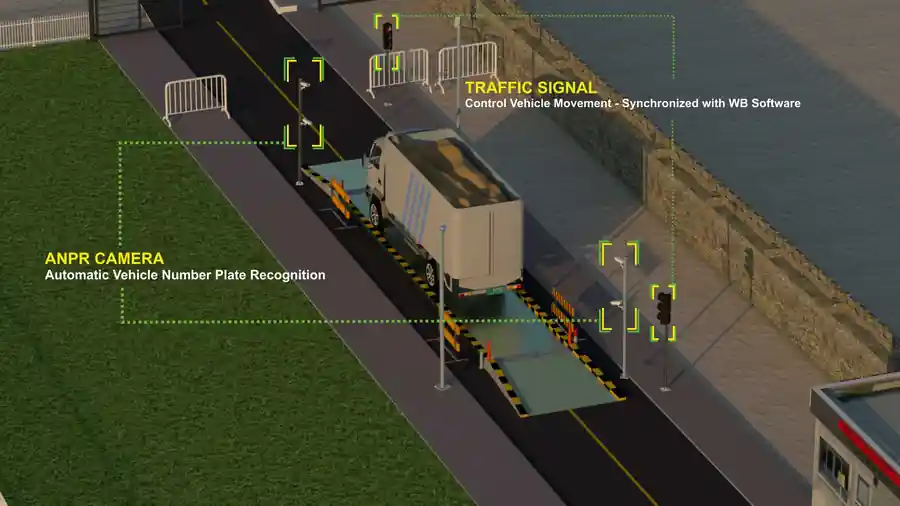
RFID reads a vehicle tag, while ANPR reads a number plate. Either method can help the software identify the truck and look up its record. However, identification alone should not release the barrier: the system must also check access approval and platform availability.
If the vehicle details do not match an approved record, the system can hold the truck for operator review. Meanwhile, valid vehicles can proceed when the route and transaction conditions allow. Explore our weighbridge software for related workflow options.
Position Sensors and Stable Weight Checks
Position sensors help confirm that the truck has reached the correct point on the platform. In addition, the weighing indicator supplies the weight reading and its stability status. The control system can require both conditions before saving the result.
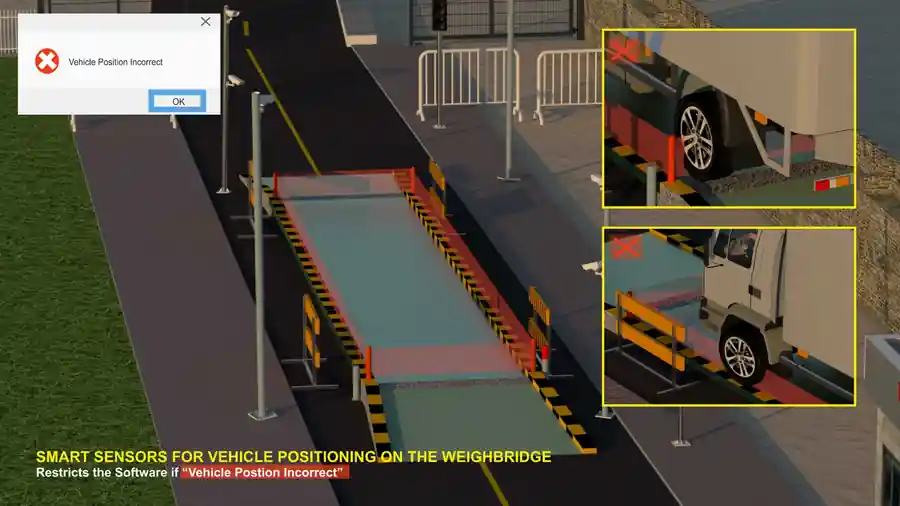
If the truck stops outside the allowed zone, the system can prompt the driver to reposition it. Therefore, staff can resolve the issue before the software completes the weighing step. Sensor placement must suit the vehicle types and platform layout.
Benefits of Weighbridge Traffic Control
Guide drivers through entry and exit
Reduce conflicting vehicle movements
Help prevent a second truck entering an occupied platform
Link vehicle access to the weighing record
Reduce routine manual barrier operation
Support supervised and unmanned weighing workflows
Provide clearer records of access and weighing events
For example, event logs can help staff review why a vehicle waited or failed an access check. This gives the team useful information when resolving a site issue.
Planning Your Weighbridge Boom Barrier System
First, share the platform size, vehicle types and expected trucks per hour. Next, send a site plan showing approach lanes, waiting areas and exit routes. Photos also help us review space for signals and barrier cabinets.
We then check the existing indicator, software, power supply and network links. In addition, we agree how staff will handle power loss, unread tags, sensor faults and manual override. Clear recovery steps help operators restore the workflow in a controlled way.
UAE Installation and Line-of-Traffic Support
Reliable Industrial Group can help with equipment selection, control integration, installation and operator training. We also review how the traffic system connects with vehicle identification and weight records. Learn more about our unmanned weighbridge solutions and truck scale information.
Frequently Asked Questions
Can traffic lights work with an existing weighbridge?
Yes, where the indicator, software and controller support the required signals. First, we review those interfaces and the current weighing process.
Will RFID always open the barrier immediately?
No. An approved tag confirms vehicle identity, but the system should also check the platform and access conditions. Only then should it permit entry.
Can a weighbridge boom barrier support unmanned operation?
Yes, as part of a complete control system. However, the site also needs suitable sensors, fault handling and a way to contact an operator when a problem occurs.
Discuss Your Weighbridge Traffic Control Project
Contact Reliable Industrial Group for weighbridge traffic control in the UAE. Send your platform details and site layout so we can review the right signal, sensor and barrier arrangement.
A weighbridge can only provide the correct result when the vehicle is fully and correctly placed on the platform. If part of the truck is outside the platform or the vehicle is not aligned properly, the captured weight may be incorrect.
Position sensors help prevent this issue.
How Position Sensors Work
Position sensors are installed near the weighbridge approach or platform area. They detect whether the vehicle is within the required weighing zone. If the vehicle is not properly positioned, the system can stop the weight capture and instruct the driver to move forward or backward.
Benefits of Position Sensors
Position sensors help:
Prevent partial weighing
Reduce incorrect tickets
Improve transaction accuracy
Support unmanned operation
Improve safety around the platform
Strengthen anti-fraud controls
Position Sensors with Traffic Lights
When connected with traffic lights, the sensors can guide drivers. For example, the light remains red until the vehicle is correctly positioned and the weight is stable. After the transaction is completed, the light turns green.
Position Sensors with Software
The weighbridge software can record whether the position condition was satisfied during the transaction. This adds an extra layer of audit control.
Conclusion
Position sensors are a small but important part of weighbridge automation. They help ensure that every transaction is based on correct vehicle placement and reliable weighing conditions.
https://reliableglobal.com/wp-content/uploads/Website.gif00adminhttps://reliableglobal.com/wp-content/uploads/Website.gifadmin2026-05-12 16:50:112026-05-12 16:50:13How Position Sensors Prevent Incorrect Weighbridge Transactions
Different industries use weighbridges for different purposes, but the goal is usually the same: accurate material movement records. Whether the site handles cement, steel, aggregate, scrap, waste, chemicals, or finished goods, every truck transaction matters.
Weighbridge automation helps industries capture accurate data, reduce delays, and improve control.
Cement Industry
Cement plants manage raw materials, clinker, cement bags, bulk tankers, and dispatch vehicles. Automated weighing helps control incoming and outgoing material, reduce truck waiting time, and maintain reliable dispatch records.
Steel companies handle coils, billets, scrap, plates, pipes, and finished products. Accurate truck weighing is important for billing, inventory, and logistics.
Automation can help link vehicle weight with sales order, purchase order, material type, and customer details.
Quarry and Aggregate Industry
Quarries and aggregate suppliers usually manage high truck traffic and repetitive material dispatch. Automated weighbridge systems can reduce congestion, improve ticket accuracy, and provide better production reports.
Recycling and Waste Management
Recycling and waste management sites need reliable records for incoming and outgoing materials. Camera evidence, vehicle identification, and software reporting are useful for transparency and compliance.
Logistics and Warehousing
Logistics yards and warehouses can use weighbridge automation to control vehicle movement, loading, unloading, and dispatch records.
Conclusion
Weighbridge automation is not limited to one industry. Any business that depends on truck movement and material weight can benefit from a controlled, digital, and traceable weighing process.
https://reliableglobal.com/wp-content/uploads/Website.gif00adminhttps://reliableglobal.com/wp-content/uploads/Website.gifadmin2026-05-12 16:46:402026-05-12 16:46:41Weighbridge Automation for Cement, Steel, Quarry and Recycling Industries
RFID and ANPR are both used for vehicle identification, but they work in different ways. RFID identifies a vehicle using a tag or card. ANPR identifies a vehicle by reading the number plate.
When both technologies are used together, the system becomes more secure and reliable.
RFID Strength
RFID is fast and consistent. It is suitable for regular fleets, repeated vehicles, and controlled truck movements. Once a tag is assigned to a vehicle, the system can quickly retrieve the vehicle details.
ANPR Strength
ANPR provides visible verification of the vehicle number plate. This is important when outside vehicles visit the site or when the company wants image proof of the transaction.
Combined Workflow
A truck arrives at the gate. The RFID reader detects the tag. At the same time, the ANPR camera captures the number plate. The software compares both records.
If the RFID tag and number plate match the registered vehicle, the system allows the vehicle to proceed. If there is a mismatch, the system can alert the operator or block the transaction.
Using both RFID and ANPR helps prevent tag swapping and wrong vehicle entry. It also creates a stronger audit trail because the transaction includes both digital tag identity and number plate image evidence.
Best Use Cases
RFID and ANPR combination is suitable for:
Cement plants
Logistics hubs
Steel factories
Quarries
Recycling plants
High-security manufacturing sites
Multi-vehicle dispatch yards
Conclusion
RFID and ANPR together provide a stronger foundation for unmanned weighbridge automation. The combination improves speed, security, and confidence in every weighing transaction.
https://reliableglobal.com/wp-content/uploads/Website.gif00adminhttps://reliableglobal.com/wp-content/uploads/Website.gifadmin2026-05-12 16:26:222026-05-12 16:47:32How RFID and ANPR Work Together in an Unmanned Weighbridge System
Many companies start with a manual weighbridge process. A vehicle arrives, the operator enters the vehicle details, the weight is captured, and a ticket is printed. This works for small operations, but it becomes difficult when traffic increases.
An automated weighbridge system is designed to improve speed, accuracy, and control by reducing manual dependency.
A manual weighbridge system depends heavily on the operator. The operator records vehicle number, material, customer, supplier, gross weight, tare weight, and net weight.
Manual systems are simple and low-cost, but they can create problems such as typing mistakes, duplicate entries, slow processing, missing records, and limited security.
An automated system uses software and connected devices to control the weighing process. RFID, ANPR, sensors, cameras, traffic lights, and barriers can all be connected to the software.
The system can identify vehicles, validate transactions, capture images, record stable weight, print tickets, and send reports automatically.
Comparison
Speed: Automated systems are faster because vehicle identification and data capture are automatic.
Accuracy: Automated systems reduce manual entry errors.
Security: Automated systems can use RFID, ANPR, cameras, and sensors to prevent incorrect transactions.
Reporting: Automated systems provide better reports, dashboards, and database records.
Cost: Manual systems cost less initially, but automated systems can save time and reduce losses in the long term.
Which One Should You Choose?
For low-traffic sites, manual operation may be enough. For high-traffic sites, bulk material operations, multi-shift factories, logistics yards, and sites with fraud concerns, automation is usually the better option.
Conclusion
The best choice depends on truck volume, material value, staffing, reporting needs, and control requirements. Reliable Global can help evaluate whether a manual, semi-automated, or fully unmanned weighbridge system is suitable for your site.
https://reliableglobal.com/wp-content/uploads/Website.gif00adminhttps://reliableglobal.com/wp-content/uploads/Website.gifadmin2026-05-12 16:21:562026-05-12 16:47:39Manual vs Automated Weighbridge System: Which Is Better for High-Traffic Sites?
Weighbridge transactions are directly connected to material quantity, billing, inventory, dispatch, and supplier or customer settlements. Even small errors can create major financial losses when repeated across many truck movements.
Fraud or manipulation can happen intentionally or unintentionally. A secure weighbridge system helps reduce both.
Common Weighbridge Risks
Common issues include:
Vehicle not fully positioned on the platform
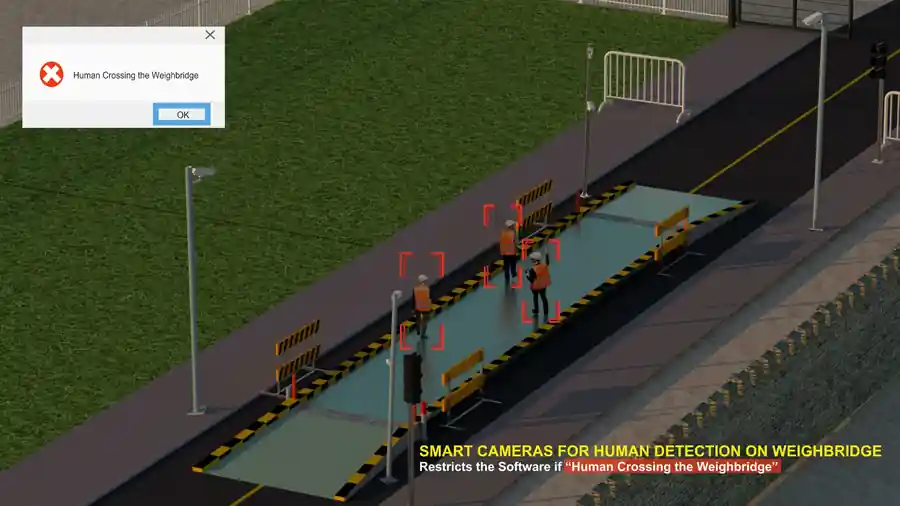
Driver or person standing on the weighbridge during weighing
An anti-fraud weighbridge system combines software rules with hardware controls. RFID or ANPR verifies the vehicle identity. Position sensors check whether the vehicle is correctly placed. Cameras capture evidence. Traffic lights and barriers control movement. The software validates each step before allowing the weight to be recorded.
If any condition is not satisfied, the system can block the transaction or alert the operator.
Role of Position Sensors
Position sensors confirm that the truck tires are within the correct weighing area. This helps prevent partial weighing, overhang, or incorrect placement. The system can guide the driver until the vehicle is positioned correctly.
Role of Cameras
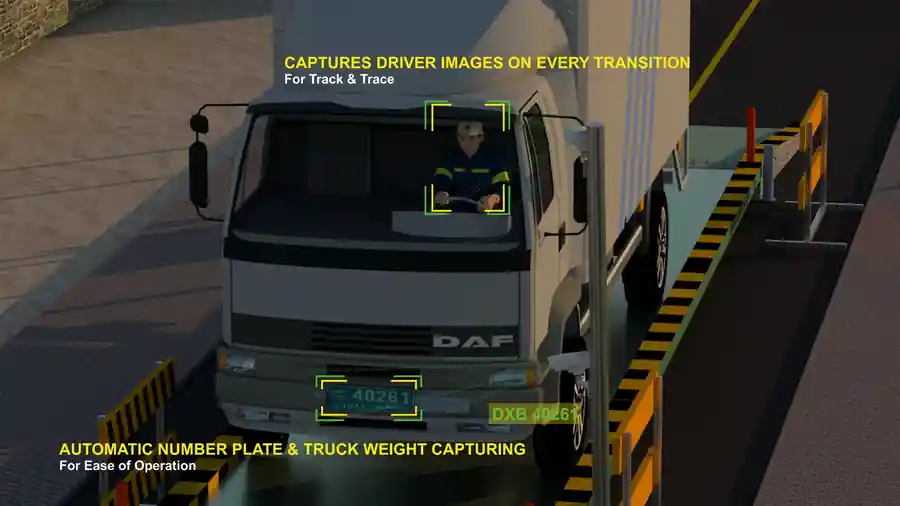
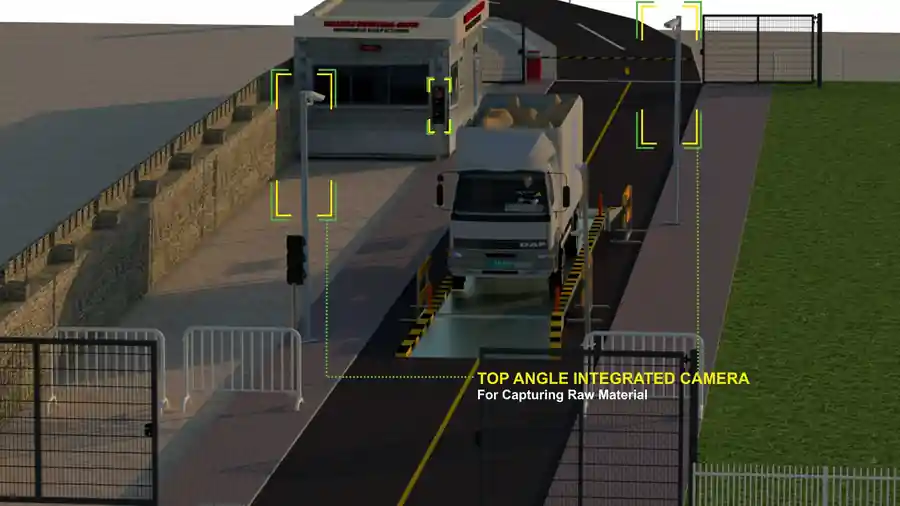
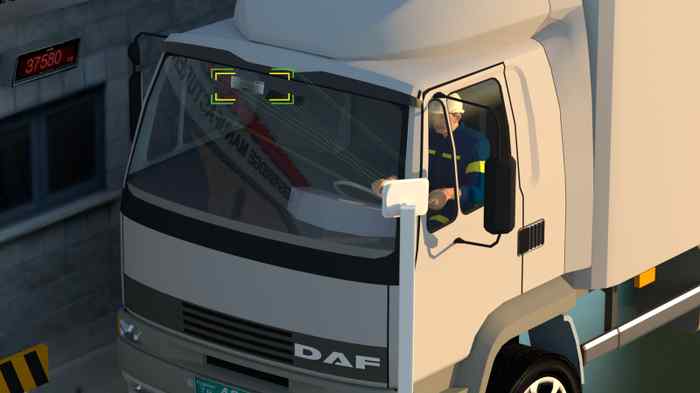
Surveillance cameras provide visual proof. They can capture the vehicle, material, number plate, driver cabin, and platform area. This makes it easier to verify transactions later.
Role of Software Controls
Software controls ensure that transactions follow the correct workflow. For example, the system can prevent second weighing without a valid first weighing, block duplicate tickets, validate order details, and record all changes in an audit trail.
Conclusion
An anti-fraud weighbridge system protects the business from manual errors, disputes, and intentional manipulation. It is especially important for high-volume material movement sites where every kilogram has financial value.
Can cameras stop weighbridge fraud completely?
Cameras alone are not enough, but cameras combined with sensors, RFID, ANPR, and software rules create stronger protection.
Can the system block wrong transactions automatically?
Yes, the software can be configured to block transactions if validation conditions fail.
https://reliableglobal.com/wp-content/uploads/Website.gif00adminhttps://reliableglobal.com/wp-content/uploads/Website.gifadmin2026-05-12 16:08:482026-05-12 16:16:43Anti-Fraud Weighbridge System: How to Stop Weight Manipulation and Manual Errors
ANPR weighbridge software uses automatic number plate recognition cameras to capture and identify vehicle plate numbers during weighbridge transactions. The system reads the truck number plate and sends the plate details to the weighbridge software.
This helps automate vehicle identification and creates a visual record of every weighing transaction.
In busy industrial sites, trucks may arrive continuously throughout the day. Manual vehicle number entry can be slow and inaccurate. ANPR helps speed up the process by automatically reading the number plate and matching it with registered vehicle records or transaction details.
ANPR is especially useful when the site receives many third-party trucks, temporary vehicles, or outside transporters.
The ANPR camera is installed at the entry gate, weighbridge approach, or platform area. When a vehicle enters the detection zone, the camera captures the number plate and processes the image. The recognized number is passed to the weighbridge software.
The software can then validate whether the vehicle is expected, registered, blacklisted, or linked to a specific order.
ANPR with RFID for Higher Security
For stronger control, ANPR can be used together with RFID. RFID identifies the assigned vehicle tag, while ANPR confirms the visible number plate. If the RFID tag and number plate do not match, the system can block the transaction or send an alert.
This is useful for preventing tag swapping, incorrect vehicle entry, and unauthorized material movement.
ANPR with Camera Evidence
ANPR systems also support image evidence. The software can store number plate images along with the weight record, ticket number, date, time, material, and vehicle details.
This makes the transaction more transparent and useful for audit or dispute resolution.
Conclusion
ANPR weighbridge software improves automation, security, and transaction accuracy. It is a valuable addition for sites that need automatic vehicle verification and strong evidence records.
Can ANPR work at night?
Yes, with suitable camera selection, lighting, angle, and installation.
Can ANPR detect UAE number plates?
ANPR performance depends on camera configuration, region settings, installation angle, lighting, and software capability.
https://reliableglobal.com/wp-content/uploads/Website.gif00adminhttps://reliableglobal.com/wp-content/uploads/Website.gifadmin2026-05-12 15:54:082026-05-12 16:17:55ANPR Weighbridge Software: Automatic Number Plate Recognition for Truck Scales
An RFID weighbridge system uses radio frequency identification technology to identify trucks automatically during weighing transactions. Each vehicle is issued an RFID tag or card that is linked to vehicle details, customer information, transporter, material, or job reference.
When the vehicle reaches the entry point or weighbridge, the RFID reader detects the tag and sends the information to the weighbridge software.
Manual vehicle number entry can cause mistakes. Drivers may give incorrect details, vehicle numbers can be typed wrongly, and duplicate transactions can occur. RFID reduces these issues by creating a unique digital identity for each vehicle.
RFID is especially useful for companies with regular vehicles, internal fleets, contract transporters, and repeated material movements.
In many industries, a truck is weighed twice: once before loading or unloading and once after. The RFID tag helps the software match the first and second weighing automatically.
This reduces confusion and helps calculate net weight accurately.
RFID with Gate Pass and Material Control
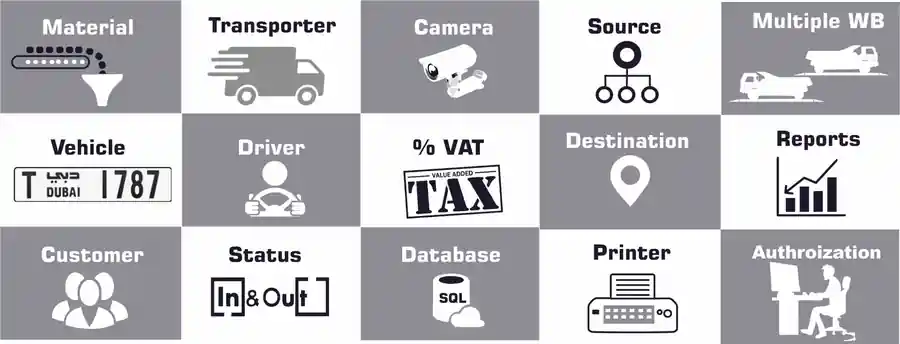
RFID can also be linked with gate pass workflows. For example, a vehicle may be linked to a sales order, purchase order, supplier, customer, material type, source, destination, and validity period.
This improves control over material movement and prevents unauthorized transactions.
RFID and Anti-Fraud Control
RFID alone does not prevent all fraud, but it is a strong foundation. When RFID is combined with ANPR, cameras, sensors, and software rules, the system becomes more secure and reliable.
Conclusion
An RFID weighbridge system improves vehicle identification, reduces manual entry, and supports faster transaction processing. It is one of the most practical starting points for weighbridge automation.
Can RFID be used for outside supplier vehicles?
Yes, RFID tags can be issued to regular suppliers or contract vehicles.
Can RFID replace manual vehicle entry?
Yes, vehicle details can be automatically fetched from the assigned RFID tag.
https://reliableglobal.com/wp-content/uploads/Website.gif00adminhttps://reliableglobal.com/wp-content/uploads/Website.gifadmin2026-05-12 15:24:442026-05-12 17:14:59RFID Weighbridge System: How RFID Tags Control Vehicle Weighing Operations
Yes. In many cases, an existing truck scale or weighbridge can be automated without replacing the complete platform. The key requirement is to assess the existing weighbridge condition, indicator communication, site workflow, cabling, network, power supply, and required level of automation.
This is a cost-effective option for companies that already have a working weighbridge but want to improve speed, accuracy, reporting, and control.
The first step is usually to connect the weighing indicator to the software. The software captures live weight data and records every transaction digitally. This alone can reduce manual entry errors and improve reporting.
Once the basic software is working, additional automation devices can be added.
Add Vehicle Identification
RFID and ANPR are two common methods used for vehicle identification. RFID is useful when the company controls the vehicle fleet or can issue tags to regular trucks. ANPR is useful when many outside vehicles visit the site and automatic plate capture is required.
Add Vehicle Position and Camera Evidence
Position sensors ensure that the truck is properly placed on the platform before weight capture. Cameras provide visual proof of the transaction. Together, they create a stronger anti-fraud and audit system.
Add Traffic Lights and Barriers
Traffic lights and barriers control vehicle movement. They help avoid unsafe or incorrect movement around the weighbridge area and reduce confusion for drivers.
Why Upgrade Instead of Replace?
Replacing a complete weighbridge can be expensive and may not be necessary if the platform and load cells are in good condition. Automation allows the company to upgrade the process around the existing equipment.
Conclusion
Truck scale automation is a practical way to modernize existing weighing operations. Reliable Global can review the current weighbridge, indicator, software requirement, and site process to suggest a suitable automation upgrade.
Do I need to replace my old weighbridge for automation?
Not always. If the existing system is healthy and compatible, automation can often be added.
Can any indicator be connected to software?
Many indicators can be connected through serial, Ethernet, or protocol-based communication, but compatibility must be checked.
https://reliableglobal.com/wp-content/uploads/Website.gif00adminhttps://reliableglobal.com/wp-content/uploads/Website.gifadmin2026-05-12 12:26:432026-05-12 17:13:34Truck Scale Automation: How to Automate an Existing Weighbridge Without Replacing It