
How do I get started with inkjet date coding?

Prior to implementing inkjet date coding for your products, follow the steps below:

Determine your requirements:
Consider the type of product you need to mark or print. (such as expiry date or batch codes).
Choose the right equipment: Select an inkjet date coder that is capable of meeting your requirements. Look for a reliable and user-friendly model that is compatible with the type of product(s) you need to mark.
Select the right ink: Choose an ink that is safe for your product and environment. There are various types of inks available, including pigment-based and solvent-based inks. So make sure you select the appropriate ink for your needs.
Test and optimize: Before fully implementing inkjet date coding, perform some tests to be clear from your end. Ensure that the quality, consistency, and durability of the ink on the product surface meet your requirements. Optimize the settings of the inkjet date coder to ensure that it produces clear and legible marks.
Train your team: Provide training to your team on how to operate the inkjet date coder and maintain the equipment.
Once you have taken these steps, you can begin implementing inkjet date coding for your products. This technology can help you ensure product traceability, compliance, and safety. Additionaly, it can help enhancing the efficiency of your production process.
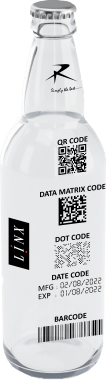
What are the benefits of inkjet date coding for pharmaceutical products?

The use of inkjet date coding on pharmaceutical products has a range of benefits. Inkjet date coding helps maintain the shelf life and product integrity of medications. Additionally, ensures the blocking of bad batches prior shipping it to consumers. This enhanced quality control has many advantages, including:
1) Improved Patient Safety: Due to reliable expiry dates printed on drug packaging, patients can be sure of their consumption. Additionally, manufacturers using inkjet-coder can easily track each individual batch.
2) Reduced Waste: Explicitly coding on the product avoids return of goods by the consumer or the retailer. Also, avoids the costs associated with returning them to the manufacturer for further processing or disposal.
3) Brand Protection: Consistent branding across different batches gives customers confidence. Furthermore, this helps deter counterfeiting and ensure that all available medications are authentic.
Overall, inkjet date coding provides an invaluable service for healthcare providers in ensuring safe consumption.

What types of pharmaceutical products can be inkjet date coded?

Inkjet date coding for marking pharmaceutical products with important information such as expiration dates, lot numbers, and batch codes. This versatile technology can print on various types of pharmaceutical products including:
Bottles and jars: Expiry date, lot numbers, QR code and batch codes on plastic or glass bottles and jars.

Blister packs: Expiry date, lot numbers and batch codes on the foil backing of blister packs like tablets and capsules.

Pouches: Expiry date and lot numbers on the packaging of individual doses of medication, such as those used in hospitals.

Vials and ampoules: Expiry date, QR code and batch codes on the glass or plastic containers used to store injectable medications.

Labels and outer packaging: Expiry date, lot numbers and batch codes on labels or outer packaging of pharmaceutical products.

Overall, inkjet date coding printers have become the primary solution to mark important information on a wide range of pharmaceutical products. By using this technology, pharmaceutical companies can ensure that their products are traceable, compliant, and safe for consumers.

What Are the Benefits of Using a Coding and Marking Printer for Dairy Products?

If you’re in the dairy industry, using a coding and marking printer is essential to your production process. This type of printer allows for quick and efficient labeling of food products like dairy with accurate dates and codes, ensuring that they stay fresh longer.

What Is a Coding and Marking Printer Used for in the Dairy Industry?

A coding and marking printer is a device used to print highly detailed images, text, or barcodes onto various surfaces. This process is often used in pharmaceuticals and food & beverage industries, where product identification with lot numbers, expiration dates, tracking information, logos, and other critical printing needs are required for quality control.

How Effective Is Laser Marking for Printing Expiry Dates and LOT Codes on Glass Bottles?

Laser marking and etching for printing expiry dates and LOT codes on glass bottles. Here are some important considerations when using laser marking and etching on glass bottles:

  1. Choosing the suitable laser: Different types of lasers are available for laser marking and etching, including CO2 and fiber lasers. The choice of laser will depend on the material, printable information, and line speed.
  2. Legibility: Laser marking and etching should produce legible and clear prints that remain visible throughout the shelf life. This helps to ensure that consumers can quickly identify the product’s expiry date and LOT code.
  3. Durability: Laser marking and etching should be durable and resistant to environmental factors such as moisture, heat, and abrasion. This ensures that the information remains accurate and legible throughout the product’s shelf life.
  4. Compliance: Regulatory agencies require manufacturers to label their products with expiry dates and LOT codes to ensure food safety. Laser marking and etching should comply with these regulations to avoid fines or penalties.
  5. Efficiency: Laser marking and etching are fast and efficient methods of printing information on glass bottles. This helps to reduce production time and costs and increase productivity.

In conclusion, laser marking and etching are effective methods of printing expiry dates and LOT codes on glass bottles.

Can You Print Directly on Glass Bottles?

Printing date codes, lot numbers, and other details on glass bottles and containers using inkjet coding and marking are possible. Inkjet coding and marking machines work with glass surfaces and instead produce high-quality, accurate prints.

A glass bottle date stamp or coding machine is an essential tool for manufacturers needing to print product information. These machines use inkjet technology to print expiry dates, batch codes, and barcodes directly onto the surface of the glass.

Inkjet coding and marking on glass bottles require food-grade ink that is safe for consumption and compliant with regulatory requirements. In the first place, make sure that the ink adheres to the glass’s surface. Moreover, it should remain legible throughout the product’s shelf life and resist fading, smudging, or rubbing off.

In conclusion, inkjet coding and marking on glass bottles and containers is a fast, efficient, and cost-effective solution.

Where Should I Print My Date Codes on a Bottle?

As a manufacturer or distributor of beverages, ensuring product safety and quality is the top priority. One way you can enhance the visibility of your product information is by imprinting best-before dates or batch codes on the bottles or cans. Where to print these codes, however, can be a concern. That’s where our coders come in, offering complete flexibility in printing options. From the curved surface of the bottle to the bottom and even the cap, our inkjet coder for the beverage can print the required information per your specific needs. With our state-of-the-art technology, you can rest assured that your products are correctly labeled and ready to go to market.

How Do I Ensure My Bakery Coding Equipment Meets Regulatory Requirements?

Using food-grade ink that is safe for consumption and compliant with regulatory requirements is essential when printing expiry dates on baked goods. Regulatory authorities require food manufacturers to include expiry dates as part of food safety regulations, so compliance with these regulations is necessary to avoid fines or penalties and to ensure that products are safe for consumption. Therefore, it is important to ensure that the date coder being used meets all relevant regulatory requirements.

What Features Should I Look for in a Bakery Date Coder?

When selecting a date coder for bakeries, it is important to choose one that is fast and efficient enough to keep up with high-volume production while ensuring accurate and legible printing. The date coder should also be easy to set up and operate to reduce downtime and minimize errors during the printing process. Additionally, some date coders come with software that allows customization of printing settings, such as font size and expiration date format, to meet the specific needs of the bakery.