
Expiry Date Printer Applications
Where Can You Print Expiry Dates?
Reliable Global provides expiry date printer solutions for different packaging materials including bottles, cartons, cans, pouches, tobacco boxes, snack packs, plastic packaging and metal containers. Based on your product surface and production speed, we can recommend Continuous Inkjet, Laser Marking, Thermal Transfer or Large Character Marking solutions.
| Application | Sample | Recommended Printer | Best For | View Solution |
|---|---|---|---|---|
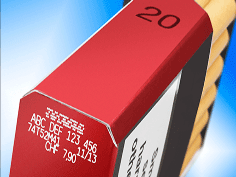
| Tobacco Box Coding |
|
Thermal Transfer / Inkjet Coding | Expiry date, batch number, QR code and product traceability on tobacco boxes | Thermal Transfer |
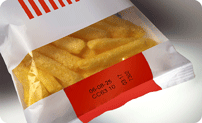
| Snacks & Flexible Packaging |
|
Thermal Transfer Overprinter | Expiry date, MFG date, batch code and barcode printing on flexible films and pouches | Thermal Transfer |
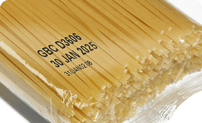
| Plastic Packaging |
|
Thermal Transfer / Inkjet Printer | Date coding on plastic packs, labels, bags, pouches and laminated packaging | Inkjet Coding |
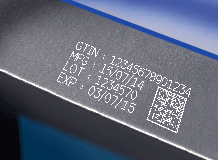
| Permanent Laser Marking |
|
Laser Marking Machine | Permanent expiry date, batch code and lot number marking on selected materials | Laser Marking |
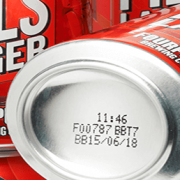
| Metal Can Coding |
|
Continuous Inkjet Printer | Expiry date, batch number and production code on metal cans and tins | Continuous Inkjet |
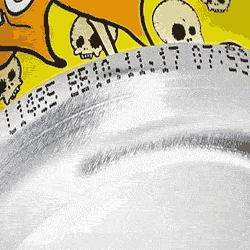
| Can Date Coding |
|
Continuous Inkjet / Laser Coder | High-speed date coding on cans, tins and cylindrical containers | Continuous Inkjet |
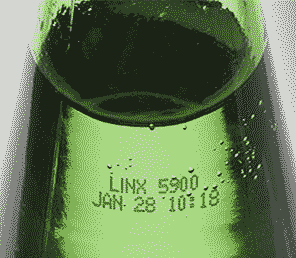
| Bottle Date Coding |
|
Continuous Inkjet Printer | MFG date, EXP date and batch code printing on plastic and glass bottles | Bottle Coding |
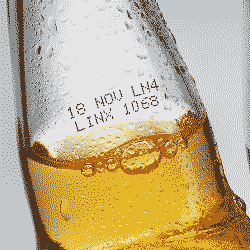
| Bottle Expiry Date Printing |
|
Inkjet Date Coder | Expiry date and batch code printing for beverage, dairy, cosmetics and chemical bottles | Date Coder |
Related Coding and Marking Solutions
Explore more Reliable Global coding and marking solutions for expiry date printing, batch coding, bottle coding, carton coding, barcode printing and industrial product identification.
- Continuous Inkjet Printers
- Laser Marking Machines
- Thermal Transfer Overprinters
- Large Character Marking Printers
- Batch Coding Solutions
- Bottle Coding Machines
- Box and Carton Coder
- Date Coder
- Inkjet Coding and Marking
- Barcode Printer
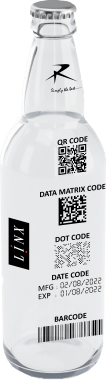
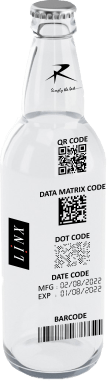
Printing date codes, lot numbers, and other details on glass bottles and containers using inkjet coding and marking are possible. Inkjet coding and marking machines work with glass surfaces and instead produce high-quality, accurate prints.
A glass bottle date stamp or coding machine is an essential tool for manufacturers needing to print product information. These machines use inkjet technology to print expiry dates, batch codes, and barcodes directly onto the surface of the glass.
Inkjet coding and marking on glass bottles require food-grade ink that is safe for consumption and compliant with regulatory requirements. In the first place, make sure that the ink adheres to the glass’s surface. Moreover, it should remain legible throughout the product’s shelf life and resist fading, smudging, or rubbing off.
In conclusion, inkjet coding and marking on glass bottles and containers is a fast, efficient, and cost-effective solution.
To ensure clear and easy-to-read expiry dates, the printing should be legible and placed prominently on the packaging, such as the front or back label. It is also essential to use food-grade ink when printing expiry dates on baked goods. These inks are safe for consumption, compliant with regulatory requirements, and designed to withstand baking while keeping the printed information legible and accurate.
Using food-grade ink that is safe for consumption and compliant with regulatory requirements is essential when printing expiry dates on baked goods. Regulatory authorities require food manufacturers to include expiry dates as part of food safety regulations, so compliance with these regulations is necessary to avoid fines or penalties and to ensure that products are safe for consumption. Therefore, it is important to ensure that the date coder being used meets all relevant regulatory requirements.
Prior to implementing inkjet date coding for your products, follow the steps below:
Determine your requirements: Consider the type of product you need to mark or print. (such as expiry date or batch codes).
Choose the right equipment: Select an inkjet date coder that is capable of meeting your requirements. Look for a reliable and user-friendly model that is compatible with the type of product(s) you need to mark.
Select the right ink: Choose an ink that is safe for your product and environment. There are various types of inks available, including pigment-based and solvent-based inks. So make sure you select the appropriate ink for your needs.
Test and optimize: Before fully implementing inkjet date coding, perform some tests to be clear from your end. Ensure that the quality, consistency, and durability of the ink on the product surface meet your requirements. Optimize the settings of the inkjet date coder to ensure that it produces clear and legible marks.
Train your team: Provide training to your team on how to operate the inkjet date coder and maintain the equipment.
Once you have taken these steps, you can begin implementing inkjet date coding for your products. This technology can help you ensure product traceability, compliance, and safety. Additionaly, it can help enhancing the efficiency of your production process.
A continuous inkjet (CIJ) coding printer (non-contact printing technology) can quickly print high-quality codes, text, and graphics on various substrates. Food, beverage, pharmaceuticals, and packaging industries mostly use CIJ for marking batch numbers, expiry dates, and barcodes. Here’s an overview of how a CIJ coder works:
Components of a Continuous Inkjet Printer
- Ink System:
The Continuous Inkjet printer has an ink system so that it can reserve ink. The ink, which typically contains solvents, dyes, or pigments, circulates continuously through the system. - Ink Pressure and Circulation:
CIJ pressurizes the ink and pumps it from the reservoir to the printhead. After passing through the printhead, CIJ collects the unused ink and returns it to the reservoir for recirculation. - Printhead and Nozzle:
The printhead contains a nozzle with a small opening, usually ranging from 40 to 70 microns in diameter. A piezoelectric crystal inside the nozzle vibrates at a specific frequency, typically between 60,000 and 120,000 times per second. - Droplet Formation:
As the pressurized ink enters the vibrating nozzle, it breaks into individual droplets due to the vibration effect. These CIJ droplets release in a continuous stream from the nozzle. - Charge Electrode:
Immediately after the droplets exit the nozzle, they pass through a charged electrode. The electrode imparts an electrostatic charge to each droplet, depending on the intended position of the printable character. - Deflection Plates:
The charged ink droplets travel through a pair of deflection plates, which create an electric field. Depending on the droplet charge with a more or less electric field, determining their position on the substrate. - Printing on the Substrate:
The accurately deflected CIJ droplets reach the substrate, creating the desired characters or graphics. Meanwhile, the non-deflected droplets fall into a gutter and return to the ink reservoir for recirculation. - Drying and Curing:
As the ink droplets land on the substrate, the solvents evaporate quickly, leaving behind the ink on the surface. This process results in a high-quality, permanent print that is resistant to smudging and fading.
Expiry Date Printer
Continuous Inkjet Printers are popular for printing variable information, such as dates, batch codes, or expiry dates during production. These printers explicitly handle products of different sizes, shapes, or textures, making them prime for many industries. As a reliable expiry date printer, they are especially suited for sectors like food and beverage, where food grade inks are essential. Furthermore, Linx Printing Technologies offer a range of continuous inkjet printers that are cost-effective and efficient. Some features include remote printer monitoring and customer support, concealed and easy-to-clean printheads, error-free touch-screen control, and simple self-service capability. Compared to other industrial inkjet coders, Linx’s printers provide a reliable and quality solution to meet your needs.
Know More About Our Bestselling Continuous Inkjet Printer (CIJ) – Linx 8900
This printer delivers efficient output with the help of a remote application to keep you in control anytime and anywhere. Moreover, Linx CIJ allows you to print up to six lines, including barcodes, batch coding, and QR codes. Therefore it’s perfect for high-speed production, retail packaging, and 24/7 operations.
Linx 8900 inkjet coder has popularity because of its remote access, control, and support through the Linx PrinterNet. This allows for error-free coding by enhancing your monitoring and control capabilities. Additionally, it features a quick operation with a touchscreen interface, self-service, and minimal intervention to maximize production uptime. The Linx 8900 CIJ Printer allows you to print onto both primary and secondary packaging. Hence, one printer further makes your printing process easy.
It uses a focused beam of energy from a laser source to provide precise and accurate markings. The beam can penetrate surfaces without damaging the material or surface itself while still producing readable results. In general, there are two types of laser marking printers CO2 and fiber laser machines. CO2 laser and fiber laser marking printers differ in the type of materials each can process, depending on their wavelength. Typically, fiber lasers operate at a nominal wavelength, while CO2 laser operates at a higher wavelength range. It’s worth noting that fiber lasers have multiple advantages over CO2 lasers.
Inkjet date coding has become popular in the food industry to print expiration dates and lot numbers.
Here’s how it works:
Preparation: First, the snack food product preparation by ensuring it is clean and dry. This ensures that the ink adheres to the surface of the product correctly.
Ink selection: Second, a compatible ink selection based on the substrate (surface) of the product. Food-grade inks can ensure that the ink is safe for consumption and meets regulatory requirements.
Set up: Third, set up the inkjet printer with the appropriate ink and the desired information in the printer software. This can include expiration dates, lot numbers, barcodes, and other important information.
Printing: Forth, Once the printer setup is completed, it uses a high-pressure system to spray tiny droplets of ink onto the surface of the snack food product. This creates the desired text or image on the product, which consumers and other stakeholders can easily read.
This helps to differentiate products and create brand recognition among consumers.
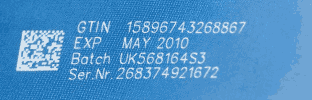
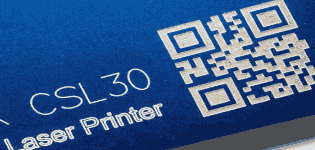
Industrial laser etching on cardboard is a non-contact, efficient, and eco-friendly method. Furthermore, it can print expiry dates, QR codes, lot codes, and more directly on the product surface. It works by using a focused laser beam to create precise, high-contrast marks on the cardboard. Despite of highly intense laser beam, it does not cause damage or deformation to the cardboard.
Industrial laser marking on cardboard
- Choosing the appropriate laser:
CO2 laser for etching on paper and cardboard materials due to their ability to produce high-quality marks with minimal damage to the substrate. The wavelength of CO2 lasers suits well for absorbing energy from organic materials like cardboard, which results in efficient and clean marking. - Generating the design:
Specialized software to create design, text, or code (such as an expiry date, QR code, or lot code). The software thereafter forwards the digital design to the laser system controller. - Focusing the laser beam:
The laser system particularly focuses the beam onto the cardboard surface for etching. This usually happens through a series of lenses or mirrors. The focused laser beam has a very high energy density, which enables it to selectively remove or alter the top layer of the cardboard material. - Etching the cardboard:
As the laser beam moves across the cardboard surface, it vaporizes or ablates the top layer of the material, creating precise and high-contrast markings. The process does not involve any ink or chemicals, making it an environmentally friendly option.

Advantages of using laser etching on cardboard
Laser etching is suitable for various applications, including marking on boxes of tobacco, perfumes, cereals, and many other products.
- High precision and quality: Creates accurate, legible, and durable markings, even on small or intricate designs.
- Fast processing speeds: Suitable for high-speed production lines, ensuring efficient operations.
- Non-contact method: Laser etching printers do not physically touch the cardboard surface. Overall, it reduces the risk of damage or deformation to the packaging.
- Eco-friendly: Eliminates the need for inks, solvents, and other consumables, reducing waste and environmental impact.
In general, laser etching is an effective marking technique for manufacturers looking to code on nonporous products.
Laser marking and etching for printing expiry dates and LOT codes on glass bottles. Here are some important considerations when using laser marking and etching on glass bottles:
- Choosing the suitable laser: Different types of lasers are available for laser marking and etching, including CO2 and fiber lasers. The choice of laser will depend on the material, printable information, and line speed.
- Legibility: Laser marking and etching should produce legible and clear prints that remain visible throughout the shelf life. This helps to ensure that consumers can quickly identify the product’s expiry date and LOT code.
- Durability: Laser marking and etching should be durable and resistant to environmental factors such as moisture, heat, and abrasion. This ensures that the information remains accurate and legible throughout the product’s shelf life.
- Compliance: Regulatory agencies require manufacturers to label their products with expiry dates and LOT codes to ensure food safety. Laser marking and etching should comply with these regulations to avoid fines or penalties.
- Efficiency: Laser marking and etching are fast and efficient methods of printing information on glass bottles. This helps to reduce production time and costs and increase productivity.
In conclusion, laser marking and etching are effective methods of printing expiry dates and LOT codes on glass bottles.
The cost of a laser marking machine depends on your application, number of products, and line speed. Generally speaking, the price range for these machines falls quite expensive compared to the inkjet coders.
Additionally, no consumables are required when using this method which helps decrease overall costs in the long term.
Laser marking suits the rubber industry, allowing direct etching and engraving messages on the product. The laser utilizes a focused beam of light to create high-contrast, precise, on the rubber surface. This process works well with various types of rubber, including natural rubber, synthetic rubber, and silicone.
Laser marking offers several advantages:
- High precision:
Fiber Laser provides highly detailed and accurate information, allowing for intricate designs, logos, barcodes, and text on rubber surfaces. - No contact:
Since laser marking results in a non-contact process, the rubber material has no physical wear. Also, it eliminates the need for consumables like ink and solvent. - Durability:
Laser marking rubber is resistant to abrasion, heat, chemicals, and UV exposure. Additionally, ensuring that the marks remain legible and intact throughout the product’s life. - Flexibility:
Fiber or CO2 Laser systems also have software programs to set different messages at variable speeds to print on rubber. - Speed and efficiency:
Laser rubber marking is fast, making it suitable for high-volume production environments.
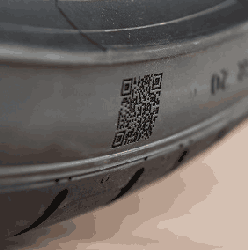
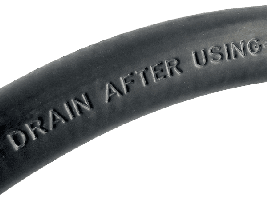
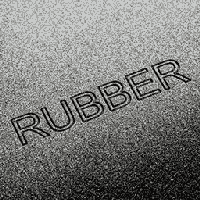
Select the suitable laser type for laser marking on rubber, such as a CO2 or fiber laser. And adjust the parameters like power, speed, and frequency to achieve the desired result without damaging the printable material.
In conclusion, the laser is an effective and versatile method for the rubber industry. Manufacturers can achieve high-quality, durable, and precise printing of rubber products by selecting the right equipment.
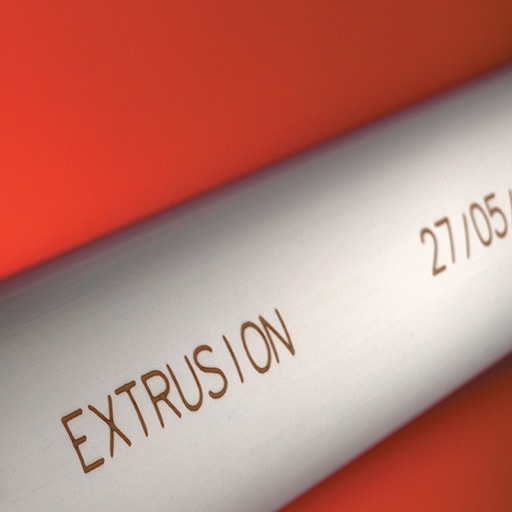
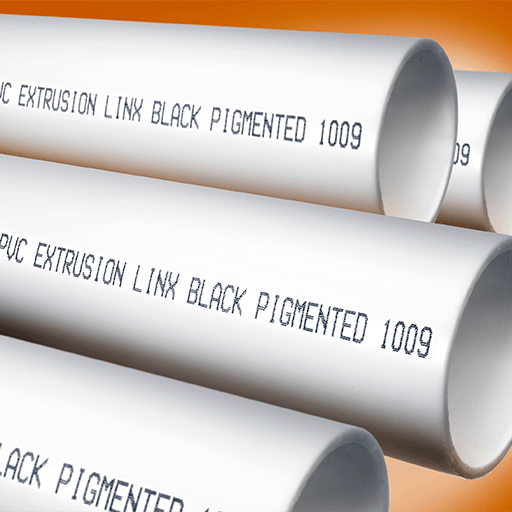
Linx inkjet coding and marking solutions explicitly cater to the extrusion industry for various applications. Moreover, these versatile printers allow easy mounting and mobility to accommodate different production line requirements. Indeed, making them ideal for marking a wide range of extruded products.
Standard extruded products that can benefit from inkjet coding and marking solutions include cable and wire, tubes, guttering, PVC pipes, panels, double-glazing window frames, molded parts, construction materials, industrial pipes and cables, connectors, aluminum profiles, metal elements, and rubber.
Importance of Coding and Marking Printers in the Extrusion Industry
Overall, Linx coders specialize in delivering high-quality prints at fast speeds, making them suitable for various coding requirements within the extrusion industry.
Coding and marking printers play a vital role in extruded materials’ identification, traceability, and compliance. Several types of printers are available for coding and marking extruded materials, each with unique advantages and limitations. When selecting a coding and marking printer for extruded materials, consider factors such as the type of material, production speed, required print quality and durability, and the complexity of the design. Each method has advantages and limitations, so choose the one that best fits your needs and requirements.
In addition to inkjet coding, laser coding options are also available, depending on the substrate material. Laser technology provides several benefits, including:
- Code longevity: Laser-marked codes do not degrade over time or during storage, ensuring long-lasting legibility.
- Variety of code sizes: Lasers can produce codes in various sizes to suit specific product and application requirements.
- No drying time: Since no involvement of ink, there is no need to wait for codes to dry, eliminating the risk of smudging.
Laser coding can be an excellent alternative option to print on specific substrates within the extrusion industry. When selecting a coding solution, consider factors such as substrate material, production speed, required print quality and durability, and the complexity of the design. Each method has advantages and limitations, so choose the one that best fits your needs and requirements.
Need help choosing a printer for extrusion applications?

There are several methods for printing and marking on cables, each with its own advantages and limitations. You can view all our coding solutions – Here
High-Speed Cable Marking Solutions
For high-speed production environments, choose a marking system specifically designed for fast production lines. These printers should be able to keep up with the speed of the production line while maintaining accurate and legible prints. Look for features like automatic printhead cleaning, low ink level alerts, and user-friendly software to ensure consistent print quality and minimize downtime.
When selecting a cable marking method, consider factors such as the cable material, production speed, required print quality and durability, and the complexity of the design. Each method has advantages and limitations, so choose the one that best fits your needs and requirements. Wire manufacturers prefer these fast inkjet coding and marking printers for mass production.
Find the best printer for your cable production – get in touch with us now
In the fast-paced beverage manufacturing industry, it’s imperative to have reliable and efficient printing solutions. That’s where Linx continuous inkjet printers and laser marking machines come in. With the ability to print on plastic and glass bottle caps, manufacturers opt for these printers gradually. Indeed, Linx printers offer an ideal solution for expiration dates and LOT codes. And with continuous printing capabilities from the top of the production line, there’s no need to slow down the process. So, whether you want to print expiry dates or etch intricate designs onto bottle caps, Linx has you covered.
In various industries, date/time and batch or lot numbers needs printing onto bottle caps instead of bottles or labels. But, as bottle caps present a challenge of small circumference and hard-to-code materials, finding an efficient solution can be difficult. Thankfully, with the right bottle coders, printing onto metal or plastic caps is possible and a breeze. Our bottle printing technology enables small character printing that is legible and readable throughout the product’s shelf life.
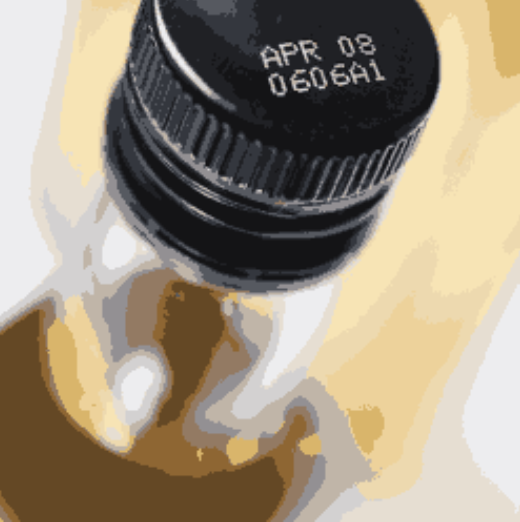
Inkjet Coder to Print on Bottle Cap
Inkjet coding is an efficient and precise way of printing information onto bottle caps. Whether it be expiry date, batch number, or QR codes. With the ability to continuous printing on fast-moving production lines, inkjet coders became crucial. Opting for solvent- or water-based inks depends entirely on the material and the desired print quality. The use of inkjet coders guarantees reliable and high-speed printing, ensuring that the production process runs smoothly and efficiently. As such, inkjet coding has become essential in the packaging industry.
Laser Marking Machine for Etching
Laser etching on bottle caps plays a vital role in the world of product labeling. The application of this technology makes it possible to accurately print or engrave expiry dates or LOT codes right onto the bottle cap itself. Unlike traditional printing methods, the laser etching process is non-contact and does not involve any ink. Indeed, the caps can last well beyond the life of the product. Bottle cap printing or etching is a reliable and cost-effective solution, especially for industries requiring strict adherence to regulatory guidelines. It ensures the protection of consumers by allowing manufacturers to keep track of their products lifespans and avoid potential hazards. Laser etching on bottle caps is an innovative and practical way to keep products safe, and consumers informed.
If You Would Like to Know More About Printing on Bottle Caps – Contact Us
Continuous inkjet (CIJ) coding is a popular and effective method for printing on rubber items such as tubes, cables, gaskets, sleeves, and more. This non-contact printing method is suitable for high-speed production lines and can print directly on moving rubber products. Here are some critical considerations for CIJ coding and printing on rubber items:
Inkjet Coding on Rubber
- Choosing the correct ink:
Selecting the appropriate ink for inkjet coding on the rubber is crucial for ensuring proper adhesion and durability.
Some common types of inks used for printing on rubber include:
Solvent-based inks: These inks provide excellent adhesion on rubber surfaces and dry quickly. They are resistant to abrasion, moisture, and chemicals.
UV-curable inks: When exposed to UV light, these inks cure, forming a durable bond with the rubber surface. UV-curable inks are also resistant to environmental factors like moisture, heat, and abrasion.
Specialty inks: Some manufacturers may require specific ink formulations designed for their unique rubber materials or applications.
Continuous Inkjet Printing Solutions
- CIJ printer features:
Look for inkjet coding printers for rubber with features such as automatic printhead cleaning, low ink-level alerts, and user-friendly software for designing and editing printed information. These features will help ensure consistent print quality and minimize downtime during production. - Integration with production line:
The CIJ coding system should integrate identically with the existing production line, allowing for easy setup, operation, and maintenance. Also, Ensure that the printer can keep up with the speed of the production line and accurately print on moving rubber items. - Batch coding and branding:
Inkjet coding printers can be used to print batch codes, logos, barcodes, and other information directly on rubber products. This helps manufacturers track and trace their products, comply with regulations, and enhance their brand visibility. - Customization:
Work with an inkjet coding printer supplier who can provide customized solutions tailored to your specific rubber items, production line requirements, and desired print quality.
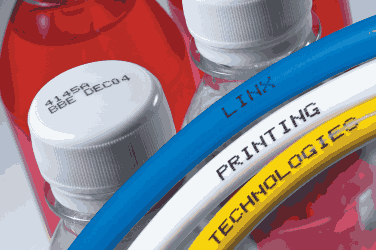
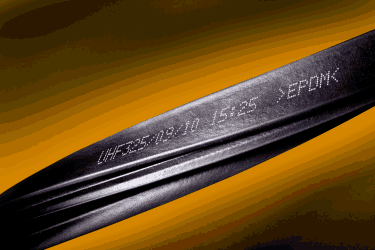
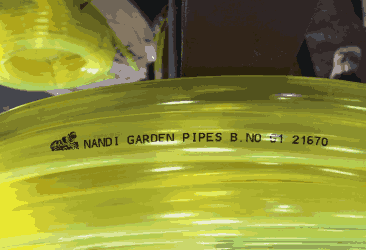
In conclusion, continuous inkjet coding is suitable for printing on moving rubber items such as tubes, cables, gaskets, sleeves, and more. By selecting the correct ink, ensuring proper integration with the production line, and choosing a printer with the necessary features, manufacturers can achieve high-quality, durable prints for batch coding and branding purposes.
If you’re wondering how to print an expiry date on glass bottles, a few options are available. Date coding and batch coding on beverage glasses can be done easily done using two types of printing technologies: continuous inkjet printers and laser coders. Choosing the right product technology depends on factors such as the color of the substrate, production environment, and line speed. For example, if you need to print on clear glass bottles, laser coding may be a better option as it provides high-contrast printing that stands out. On the other hand, if your production speed is higher and you’re printing on darker glass bottles, continuous inkjet printers may be a better choice, as they can handle faster line speeds and provide legible codes. Ultimately, understanding your specific needs will help you make the right choice regarding bottle coding on glass.
When selecting a method for printing expiration dates on glass bottles, consider factors such as the production speed, required print quality and durability, and the complexity of the design. Print expiry date on glass bottles using various methods, each with its advantages and limitations. You can view all our coding solutions – Here
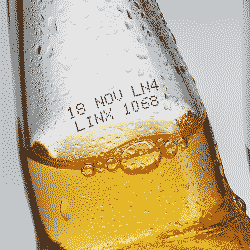

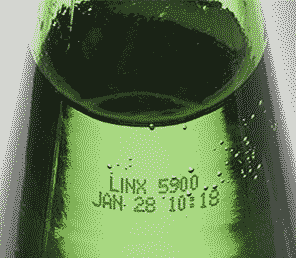
High-precision bottle expiry date printer
Get accurate and reliable glass bottle markings with our inkjet coding and laser marking printers.
Fast coding for bottling lines
Improve your beverage production with our high-speed inkjet and laser printers for expiry dates and batch codes.
Boost labeling efficiency
Maximize productivity with our cutting-edge inkjet coding and laser marking printers for glass bottle expiry date printing.

Printing expiry dates on flexible packaging is essential for ensuring product safety, compliance, and traceability. Several methods are available for printing expiry dates on flexible packaging, each with advantages and limitations. Here are some popular options:
- Continuous Inkjet (CIJ) Printer:
CIJ printers are widely used for printing expiry dates on flexible packaging because they can print directly on moving products on a production line. They offer high-quality, durable prints and can handle a variety of substrates, including flexible films and pouches. Choose an ink specifically designed for flexible packaging materials to ensure proper adhesion and durability. - Thermal Inkjet (TIJ) Printers:
TIJ printers use heat to eject ink droplets from nozzles onto the flexible packaging surface. They produce high-resolution prints and are suitable for applications requiring fine details or smaller text. TIJ printers work well for printing expiry dates on various flexible packaging materials, such as plastic films and laminates. Select an ink that is compatible with the specific flexible packaging material for optimal results. - Thermal Transfer Over Printer (TTO):
TTO printers use heat and pressure to transfer ink from a ribbon onto the flexible packaging surface. This method provides high-quality, durable prints and is particularly suitable for printing on thin films and labels used in flexible packaging. TTO printers offer excellent print resolution and can produce sharp, clear text, barcodes, and graphics.
Print Expiry Date on Packaging Films

When selecting a method for printing expiry dates on flexible packaging, consider factors such as the packaging material, production speed, required print quality and durability, and the complexity of the design. Each method has advantages and limitations, so choose the one that best fits your needs and requirements.
To ensure successful expiry date coding and marking on flexible packaging, follow these best practices:
- Choose the appropriate printer and ink/ribbon based on your packaging material and application requirements.
- Regularly maintain and clean the printer to ensure consistent print quality and prevent downtime.
- Test the adhesion, readability, and durability of the printed expiry date on the flexible packaging material before full-scale production.
- Implement a quality control system to monitor and verify the accuracy of the printed expiry dates throughout the production process.
When it comes to snack food products, a crucial aspect is the marking of the packaging. Inkjet and thermal marking are two popular methods used by manufacturers for this purpose. However, achieving the desired results requires some tips and tricks. For inkjet marking, choosing the correct ink is essential and ensuring that the printer settings are correctly configured. On the other hand, thermal marking requires preheating the substrate and adjusting the printing speed. Additionally, it’s best to use high-quality thermal transfer ribbons and test prints on sample products before mass production. These are just a few of the best inkjet and thermal marking tips and tricks that can help snack food manufacturers produce packaging that stands out and conveys essential information to consumers.
The use of inkjet date coding on pharmaceutical products has a range of benefits. Inkjet date coding helps maintain the shelf life and product integrity of medications. Additionally, ensures the blocking of bad batches prior shipping it to consumers. This enhanced quality control has many advantages, including:
1) Improved Patient Safety: Due to reliable expiry dates printed on drug packaging, patients can be sure of their consumption. Additionally, manufacturers using inkjet-coder can easily track each individual batch.
2) Reduced Waste: Explicitly coding on the product avoids return of goods by the consumer or the retailer. Also, avoids the costs associated with returning them to the manufacturer for further processing or disposal.
3) Brand Protection: Consistent branding across different batches gives customers confidence. Furthermore, this helps deter counterfeiting and ensure that all available medications are authentic.
Overall, inkjet date coding provides an invaluable service for healthcare providers in ensuring safe consumption.
If you’re in the dairy industry, using a coding and marking printer is essential to your production process. This type of printer allows for quick and efficient labeling of food products like dairy with accurate dates and codes, ensuring that they stay fresh longer.
Laser marking machines are used in various industries such as tobacco, electronics manufacturing, beverage, food packaging, pharmaceuticals, and more.
In particular, laser marking machines can quickly print expiration dates and QR codes on tobacco boxes. These laser coders mark very explicitly for product traceability as well as verification purposes. This helps tobacco companies meet safety standards set forth by government bodies. Moreover, protects consumers from potential hazards associated with smoking out-of-date products.
In today’s fast-paced world, it’s more important than ever for snack food companies to track their products. Inkjet date coding has become an increasingly popular choice for snack food manufacturers. As it offers several benefits over traditional marking methods. Not only fast coding techniques, but these inkjet coders also allow for greater flexibility and customization. Additionally, inkjet coding is more environmentally friendly and cost-effective than other marking methods. Which makes it an ideal choice for snack food companies looking to improve their bottom line.
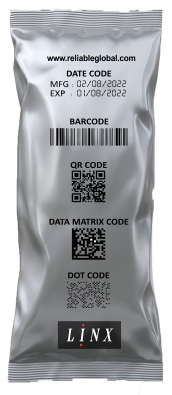
Thermal marking is a popular method for printing information on snack food products.
Here are some benefits of using inkjet date coder for a snack on snack food products:
High-resolution printing: Thermal marking produces high-resolution images and text, making it ideal for minor characters and fine detail. This ensures that critical information, such as expiration dates, lot numbers, and barcodes, are legible to consumers and stakeholders.
Permanent marking: Thermal markings are permanent and resistant to smudging, fading, or rubbing off. This ensures the information remains visible and accurate throughout the product’s shelf life.
Cost-effective: Compared to other marking methods, thermal marking is cost-effective for printing large quantities of snack food products. This automation process can print at high speeds, reducing labor costs and increasing efficiency.
Versatile: Thermal marking for different types of materials and surfaces, including plastic, metal, and paper packaging. This makes it a versatile option for snack food man various use a variety of materials in their packaging.
Environmentally friendly: Thermal marking does not require ink or other consumables, reducing waste and environmental impact.
In summary, using thermal marking on snack food products offers several benefits. Which includes high-resolution printing, permanent marking, cost-effectiveness, versatility, and environmental friendliness. By selecting the proper marking method, snack food manufacturers ensure their products have accurate labeled information. In fact, it also enhances their brand recognition and customer satisfaction.
Laser marking on paper packaging has become popular due to its precision, versatility, and eco-friendly nature. Here are some of the standard applications of laser marking on paper packaging:
- Barcodes and QR codes:
In the first place, Laser coders can create high-resolution barcodes and QR codes directly on the paper packaging. Also, it allows tracking and inventory management of the finished product. - Expiration dates and batch numbers:
Laser marking can easily print expiration dates coupled with batch numbers on the packaging. In fact, ensuring accurate and legible data for consumers and manufacturers. - Logo:
Lasers marking printers can also mark logos and branding elements on paper packaging. Moreover, it enhances product presentation and brand recognition. - Product information:
Laser coders can print detailed product information, instructions, or warnings on paper packaging. In particular, it ensures clear communication with the end users. - Serialization and unique identification:
Lasers can create unique serial numbers or identification codes on paper packaging for security, anti-counterfeiting, and traceability purposes. - Warning and Usage Instruction:
Laser marking machines can directly mark warning signs and usage instructions on paper packaging. Indeed, adding an aesthetic appeal to the product.
Advantages of Laser marking on paper packaging
- Non-contact method: Lasers marking machines do not physically touch the product surface, reducing the risk of damage or deformation to the packaging.
- High precision and resolution: Lasers can create highly accurate and detailed markings, even on small or complex designs.
- Fast processing speeds: Laser marking is suitable for high-speed production lines, ensuring efficient operations.
- Eco-friendly: Laser marking eliminates the need for inks, solvents, and other consumables, reducing waste and environmental impact.
In summary, laser marking on paper packaging provides a versatile and eco-friendly solution for creating various types of markings, including barcodes, expiration dates, logos, product information, and decorative designs. This technology offers high precision, fast processing speeds, and reduced environmental impact, making it an attractive option for manufacturers and packaging companies.
Need guidance selecting the right laser solution for paper packaging? Talk to our experts now.
Laser marking printers for marking text or QR codes on tobacco and cigarette boxes have become the typical choice. While investing in a laser marking machine, it is important to consider factors such as optics and power requirements. The usage of lasers like CO2 lasers and Fiber lasers depends on the application or desired results. Some machines may also integrate vision components that detect irregularities in products before they are processed to ensure accuracy.
When selecting a date coder for bakeries, it is important to choose one that is fast and efficient enough to keep up with high-volume production while ensuring accurate and legible printing. The date coder should also be easy to set up and operate to reduce downtime and minimize errors during the printing process. Additionally, some date coders come with software that allows customization of printing settings, such as font size and expiration date format, to meet the specific needs of the bakery.
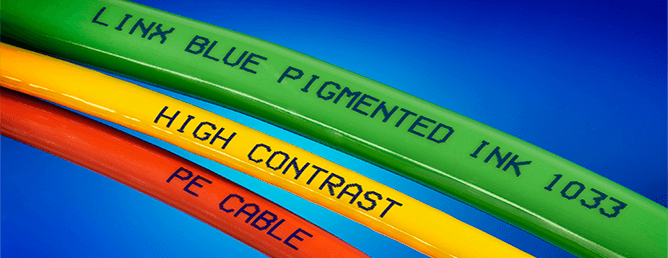
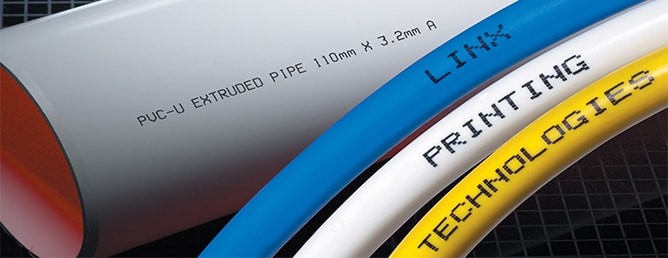
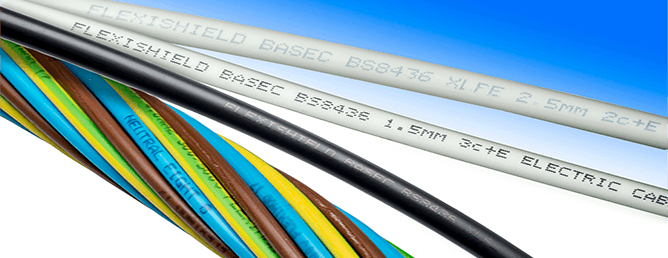
Inkjet coding printers are widely used for wire marking to print essential information directly onto products. The information published on cables and wires may include:
- Manufacturer’s name or logo:
This helps identify the brand and enhances brand visibility. - Product identification:
Marking model numbers, part numbers, or product codes help customers and installers quickly identify the specific type of cable or wire. - Technical specifications:
Wire gauge, conductor count, insulation type, voltage rating, and temperature rating are often printed on cables and wires. Also, ensures proper usage and compliance with safety regulations. - Industry standards and certifications:
Printing relevant industry standards (e.g., UL, CE, RoHS) and certifications to make the cable meet specific quality. - Sequential markings:
Identically these wire marking printers can print in meters or feet. Which helps users accurately measure and cut cables and wires during installation. - Batch or lot numbers:
These numbers help manufacturers trace products back to their production batch. Furthermore, it allows for quality control and tracking purposes. - Production date or expiry date:
The production date indicates when the cable or wire was manufactured. This information helps ensure proper stock rotation and adherence to warranty terms. Hence wire marking printers play a vital role in the cable industry. - Barcodes or QR codes:
These machine-readable codes can additional information about the cable or wire, such as its origin, production details, or technical specifications. Scanning the code can provide quick access to this information for inventory management, quality control, or installation purposes.
Inkjet Wire Marking Printers
Wire marking printers are an essential tool in the world of manufacturing and production. Inkjet Coders can easily do the marking on wire and cable for identification purposes. Whether you are working in the telecommunications industry or automotive industry, that requires precise labeling of lines. An inkjet wire marking printer can help streamline your operations and reduce errors. With the ability to print text, barcodes, and even logos, these printers suit your specific needs. So if you’re looking for a cost-effective and reliable way to improve your wire marking process. Contact us Today!




In general, the Linx inks can print with ease on flexible packaging with an inkjet coding machine. Variety of inks and fluids depending on the material and application requirements. Here are some popular ink types:
Know more about our Inks – Here
- Solvent-based Inks:
CIJ printers and some TIJ printers commonly use solvent-based inks. These inks contain pigments or dyes dissolved in a solvent that evaporates quickly. Indeed, leaving behind durable and high-quality inkjet printing on flexible packaging materials. Solvent-based inks offer good adhesion, quick drying times, and resistance to chemicals and abrasion. - Water-based Inks:
Water-based inks are suitable for use with some TIJ printers and flexographic printing systems. These inks contain pigments or dyes suspended in a water-based solution, making them more environmentally friendly than solvent-based inks. Water-based inks work well on porous substrates, such as paper and uncoated flexible inkjet packaging materials. But may not adhere well to non-porous materials without surface treatment. - UV-curable Inks:
UV-LED inkjet printers use UV-curable inks and offer excellent adhesion, durability, and resistance to chemicals and abrasion. These inks contain photoinitiators that cure instantly when exposed to UV light. Additionally, creating high-quality inkjet coding on various flexible packaging materials, including plastic films and laminates. - Hot-melt Inks:
Thermal transfer over printers (TTO) uses hot-melt inks, also known as solid inks. Also, some drop-on-demand (DOD) inkjet printers use hot melt inks. These inks come in solid form, and the print head melts the ink during the printing. As a result, transferring it from a ribbon onto the flexible packaging material. Hot-melt inks offer good adhesion and durability, making them suitable for printing on thin films and labels.
When selecting the best ink for inkjet coder for printing flexible packaging printing, consider factors such as the printer type, packaging material, production speed, required print quality and durability, and environmental considerations. Each ink type has advantages and limitations, so choose the one that best fits your coding and marking requirements.
Buy the best inkjet coder for packaging!
A coding and marking printer is a device used to print highly detailed images, text, or barcodes onto various surfaces. This process is often used in pharmaceuticals and food & beverage industries, where product identification with lot numbers, expiration dates, tracking information, logos, and other critical printing needs are required for quality control.
A laser marking machine is a type of industrial machinery designed to create, mark, and engrave date or batch codes onto objects. Compared to manual methods such as paper stickers or inkjet applications, laser etching is much faster while also providing improved legibility even after multiple wears or abrasions due to its elevated contrast over other traditional methods.
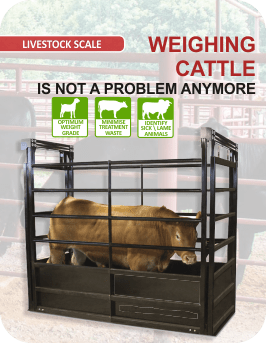
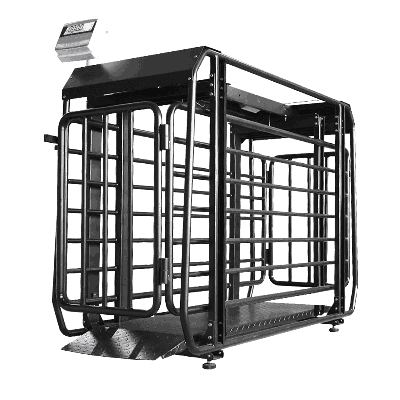
A cattle weighing scale is a specialized weighing device designed specifically for weighing cattle and other livestock animals. These scales play a crucial role in modern livestock management by providing accurate weight measurements. Moreover, it helps farmers make decisions about feeding, breeding, and overall herd health. Here’s an overview of the benefits and uses of cattle weighing scales:
Uses of Animal Weighing Scale
- Monitoring and Feeding Cattle Accurately:
Farmers can monitor their animal’s growth and development by regularly weighing cattle. This information helps them to analyze and adjust feeding programs. Which ensures each animal receives the appropriate amount based on weight, age, and production goals (e.g., meat, milk, or reproduction). Accurate feeding contributes to better feed conversion rates, cost savings, and ultimately increased profitability. - Identifying Sick Animals:
Regular weighing can help identify animals that are not gaining weight as expected or losing weight. In fact, you can quickly identify which animal indicates health issues or lameness. Early detection allows farmers to address these issues promptly. In addition, it minimizes the impact on the animal’s well-being and the herd’s overall productivity.

Advantages of Cattle and Animal Weighing Scale
- Optimum Weight Management:
Cattle weighing scales help farmers determine when their animals have reached the optimum weight for various purposes. Such as breeding, selling, or slaughtering of animals. This information ensures farmers can make well-informed decisions about the right time to sell or breed their cattle. Furthermore, it maximizes profits and maintains a healthy, productive herd. - Record Keeping and Performance Analysis:
Modern scales often come with data recording capabilities, allowing farmers to track each animal’s weight history. This data can be used to analyze the performance of individual animals and the entire herd. - Compliance and Traceability:
Accurate weight records are essential for meeting regulatory requirements related to animal welfare, traceability, and food safety. Cattle weighing scales help farmers maintain accurate documentation and demonstrate compliance with industry standards and regulations.
Cattle weighing scales come in various designs and configurations, including platform scales, alleyway scales, and weigh bars. When selecting a scale, consider factors such as the size of your herd, available space, portability requirements, and budget. Investing in a reliable and accurate scale is valuable for improving livestock management, animal welfare, and overall farm profitability.
Continuous Ink Jet Printer (CIJ) – High-speed, non-contact printing technology in time. Industries prefer these printers for coding and marking product and packaging information. It prints product data likewise, batch numbers, expiry dates, barcodes, QR codes, and logos on a wide range of materials.
Linx Global is a leading manufacturer of inkjet coding solutions and ink-jet printers. These printers are known for their ease of use and their need for very low maintenance. Linx CIJ best fits businesses looking to improve their coding and marking quality. View available coding & marking solutions here.
InkJet Coder for Printing Expiry Dates
- High-speed printing:
Linx continuous ink-jet printers can print easily despite fast-moving production lines and ensure minimal downtime. - Non-contact printing:
The CIJ technology allows non-contact printing with the substrate in detail. Indeed it enables coding on uneven surfaces and reduces the risk of damage. - Wide range of inks:
Linx offers a variety of ink types, such as food grade, pigmented, and special inks. - Easy setup and operation:
Continuous ink-jet printers feature provides not only user friendly access but also a quick change of ink systems. As a result, this makes them easy to set up, operate, and maintain. - Robust design:
Linx continuous inkjet printers can print in harsh environments coupled with sealed print heads to protect against dust and moisture. - Low maintenance:
CIJ printers require minimal maintenance with self cleaning print heads in effect. Also, it provides automatic diagnostics, ensuring optimum performance and reduced downtime. - Connectivity and integration:
Above all, These printers offer various connectivity options and can be easily integrated with existing production lines.
Overall, Investing in a Linx Global Continuous Ink-jet Printer can achieve clear coding and marking directly on your product.
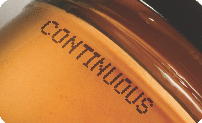
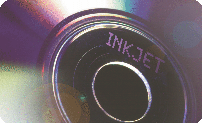
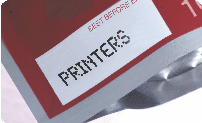
Inkjet date coding is a method of printing dates onto pharmaceutical products, such as medicine tablets and syrup bottles. Adding the date of manufacture or expiry to drug packaging can help to improve product traceability. Also, ensures consumers identify quickly whether their medications are safe to take.
Inkjet date coding involves using a nozzle to print the desired information directly onto the product. Especially, on the product packaging in a number of different formats (i.e., text, numerical numbers, and barcodes). These printers use tiny amounts of droplets of ink that can print small but highly detailed letters and numbers. The inkjet printer technology makes it easier for pharma companies to present necessary information on the box/packaging.
The best printer for coding and marking on bottles depends on various factors. Such as the bottle material, production speed, required print quality, and durability. Discover our available coding solutions – here
Bottle Coding | Plastic & Glass Bottle Printing
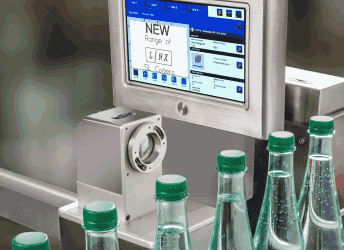
Linx provides reliable and consistent bottle coding and marking solutions to minimize rework. Our printers and coders can easily integrate into production line systems, accommodating various line speeds. Automated date, time, code, and number series functions reduce manual interventions and avoid line downtime. We offer specialized coding solutions, such as UV visible inks and permanent laser marking, suitable for both luxury brands and anti-counterfeit product identification.
Our bottle coding printers are perfect for high volume expiration date coding or batch identification, as they can print directly onto plastic or glass bottles in almost any orientation and mark variable information, including barcodes and data matrix, and QR codes, and decrease waste and environmental impact. With profound experience in creating coding and marking equipment, we understand the unique challenges presented by printing on bottles, and our coding technologies have been specifically designed to meet them. Linx bottle coders are used across various industries, such as food, beverage, cosmetics, FMCG household products, pharmaceutical, and chemical bottling, and can help minimize production costs and improve rates.
Still unsure which coding method suits your needs? Talk to our experts
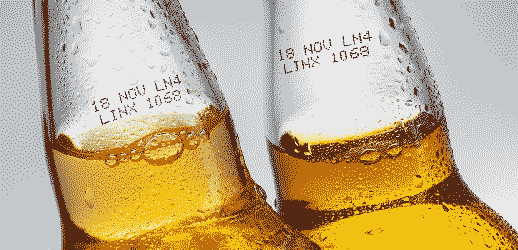
Efficiency is essential when it comes to bulk coding on glass bottles. This is where inkjet coding and laser marking come in. With the use of continuous inkjet technology, printing onto glass bottles can be done at lightning speed without sacrificing precision. On the other hand, inkless laser coding uses etching and engraving technology to create characters on the surface of the glass. Both methods are perfect for glass bottle coding. Moreover, it can print important information like expiry dates and batch codes, making it easy to keep up with production demands. When it comes to high-speed production lines, Linx printers are the perfect choice for accurate and efficient printing on glass bottles.
Continuous Inkjet (CIJ) Printers for Glass bottle coding
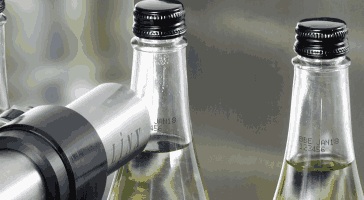
CIJ printers specialize in coding on glass bottles because they can print directly on moving products on a production line. They offer high-quality, durable prints and can handle the curved surfaces of glass bottles. Choose an ink specifically designed for glass surfaces to ensure proper adhesion and durability.
Thermal Inkjet (TIJ) Printers
TIJ coding printers use heat to eject ink droplets from nozzles onto the glass bottle surface. They produce high-resolution prints and are suitable for applications requiring fine details or smaller text. As with CIJ printers, select an ink that is compatible with glass surfaces for optimal results.
Laser Marking Machines
Laser marking is a non-contact method that uses a focused laser beam for coding on the surface of glass bottles. This method provides high precision and durability, making it ideal for marking expiration dates. CO2 or UV lasers specialize in marking on glass bottle surfaces. Indeed, they offer excellent contrast and minimal damage to the substrate. Linx fiber laser can quickly provide etching and engraving of character on glass bottles. Moreover, these printers specialize in coding at high-speed production lines.
Explore your options with our glass bottle coding experts.
Inkjet date coding for marking pharmaceutical products with important information such as expiration dates, lot numbers, and batch codes. This versatile technology can print on various types of pharmaceutical products including:
Bottles and jars: Expiry date, lot numbers, QR code and batch codes on plastic or glass bottles and jars.
Blister packs: Expiry date, lot numbers and batch codes on the foil backing of blister packs like tablets and capsules.
Pouches: Expiry date and lot numbers on the packaging of individual doses of medication, such as those used in hospitals.
Vials and ampoules: Expiry date, QR code and batch codes on the glass or plastic containers used to store injectable medications.
Labels and outer packaging: Expiry date, lot numbers and batch codes on labels or outer packaging of pharmaceutical products.
Overall, inkjet date coding printers have become the primary solution to mark important information on a wide range of pharmaceutical products. By using this technology, pharmaceutical companies can ensure that their products are traceable, compliant, and safe for consumers.
Date coders for bakeries can use various printing technologies such as inkjet, thermal transfer, or laser. The choice of technology will depend on factors such as the type of packaging material and the desired level of detail. There are various printing methods available for printing expiry dates on baked goods, including inkjet, thermal transfer, and laser. Each method has its own advantages and disadvantages, and the best method will depend on factors such as the type of packaging used, the volume of production, and the desired level of detail.
As a manufacturer or distributor of beverages, ensuring product safety and quality is the top priority. One way you can enhance the visibility of your product information is by imprinting best-before dates or batch codes on the bottles or cans. Where to print these codes, however, can be a concern. That’s where our coders come in, offering complete flexibility in printing options. From the curved surface of the bottle to the bottom and even the cap, our inkjet coder for the beverage can print the required information per your specific needs. With our state-of-the-art technology, you can rest assured that your products are correctly labeled and ready to go to market.
Linx-pigmented inks offer a durable option for coding on plastic bottle. Moreover, these printers can print batch numbers and expiry dates on various colored plastics. Indeed specializes in polyethylene (PE or PET), polypropylene (PP or OPP), PVC, and Nylon. These inks maintain clarity for years, even when exposed to daylight.
Continuous Inkjet (CIJ) Printers for Coding on Plastic Bottles
CIJ printers became popular for coding on plastic bottles because they can print directly on moving products on a production line. They offer high-quality, durable prints and can handle curved surfaces of various bottle materials, including glass, plastic, and metal. CIJ printers are suitable for high-speed production lines.
Thermal Inkjet (TIJ) Printers
TIJ coding printers use heat to eject ink droplets from nozzles onto the plastic bottle surface. They produce high-resolution prints and are suitable for applications requiring fine details or smaller text. TIJ bottle coding printers work well on various materials and can provide high-quality codes even at lower production speeds.
Laser Marking Machines
Laser marking is a non-contact method that uses a focused laser beam for coding on plastic bottle. This method offers high precision, durability, and flexibility, making it ideal for marking logos, barcodes, and other intricate designs. Laser marking machines work well on both glass and plastic bottles.
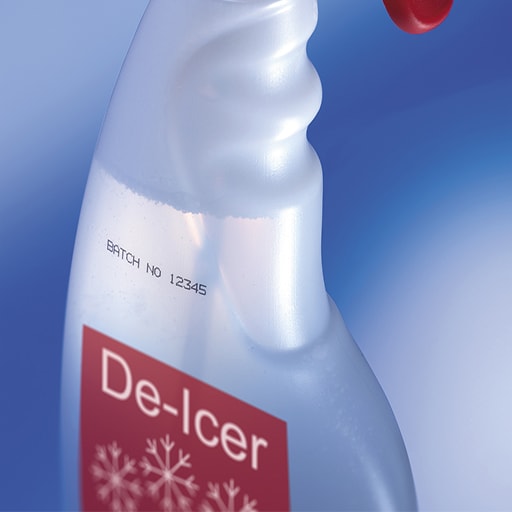
Linx Inkjet coding solutions allow manufacturers to print on plastic bottles easily. Moreover, Linx CIJ is capable of printing multiple line characters at a high-speed production line. Inkjet printers have more preference over laser marking machines in the plastic bottle industry. Considering the aspect of plastic getting damaged over high-intensity of heating through laser. Most of industries prefer black ink coding on bottles as the standard color. But at Linx, we have a variety of ink and fluids for catering to all the needs of the industrial market.
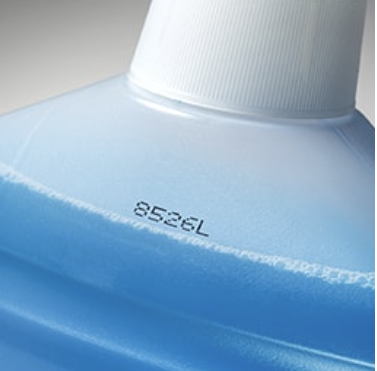
It is important to ensure that expiry dates are printed legibly and in a prominent location on the baked good’s packaging, such as the front or back label. This helps consumers quickly identify the product’s expiration date and avoid consuming expired products. Additionally, regulatory agencies require bakeries to include expiry dates and other mandatory information on their products. Therefore, ensuring that the date coder being used complies with the relevant regulatory requirements is essential.